
Four ways to avoid email misunderstandings
Have you ever been misunderstood online? We’ve all experienced occasions when an email didn’t quite convey the message it was supposed to. Such problems can take a surprising amount of time to clear up – to establish what was really being said.
An amusing email mistake was reported on the BBC last week. A Swansea council emailed its in-house translation service to ask for the Welsh translation for a road sign “No entry for heavy goods vehicles. Residential site only”. A return email arrived and its Welsh text was duly added to the sign. Unfortunately what the sign actually read in Welsh was “I am not in the office at the moment. Please send any work to be translated…”
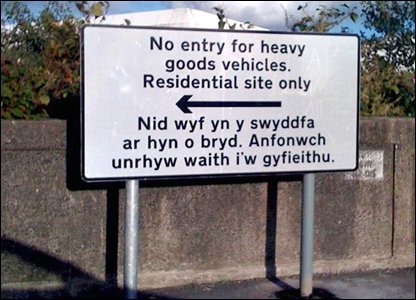
So how can you avoid an embarrassing mistake like this happening in your business? Just a short company email policy can help. It might include items such as:
- Treat all email correspondents with the same courtesy as you would those to whom you send a letter, including an informative (but not too long) signature.
- Read through all emails before you press the SEND button.
- Make sure you include a relevant subject line for every email (change the subject if replying to someone and the topic has varied from the original)
- Choose your words carefully to be unambiguous and avoid slang – and be very careful with humour as it can backfire online. This is particularly important if you correspond with those with a different cultural background from your own.
Perhaps one should add: if you have more than one language within the organisation out-of-office messages should be in BOTH languages!
Other helpful information about email policies:
- Acceptable Use Policy
- Business Link’s Internet and email policy guidelines
- Internet and email policies from Acas
Please add a comment if you have any further tips or stories.
Originally published at reachfurther.com
Helen: good list. Your #3 is my #1. My #2 would be:
5. Start with a short summary of what you’re asking the recipient to do (i.e. just read; read and comment; read and do something … read and send money) and then explain why. Barbara Minto calls this the “Pyramid Principle”.
6. Don’t say anything in an email that you wouldn’t say to the recipient face-to-face.